Seattle Small Businesses Are Using AI to Compete with Big Tech
Adominus IntelligencePublished
Key Takeaways
- Seattle has 200,000+ small businesses competing in a market dominated by Amazon, Microsoft, and Google.
- Big Tech's presence creates both challenge (talent competition, rising costs) and opportunity (enterprise-class tools at SMB prices).
- Seattle's maritime economy (Port of Seattle, fishing, shipbuilding) creates unique AI applications for logistics and supply chain.
- The city's coffee culture — 2,500+ coffee shops — is a microcosm of how AI helps hyper-competitive local industries.
- Washington has no state income tax, meaning every dollar of AI-generated savings flows directly to business owners.
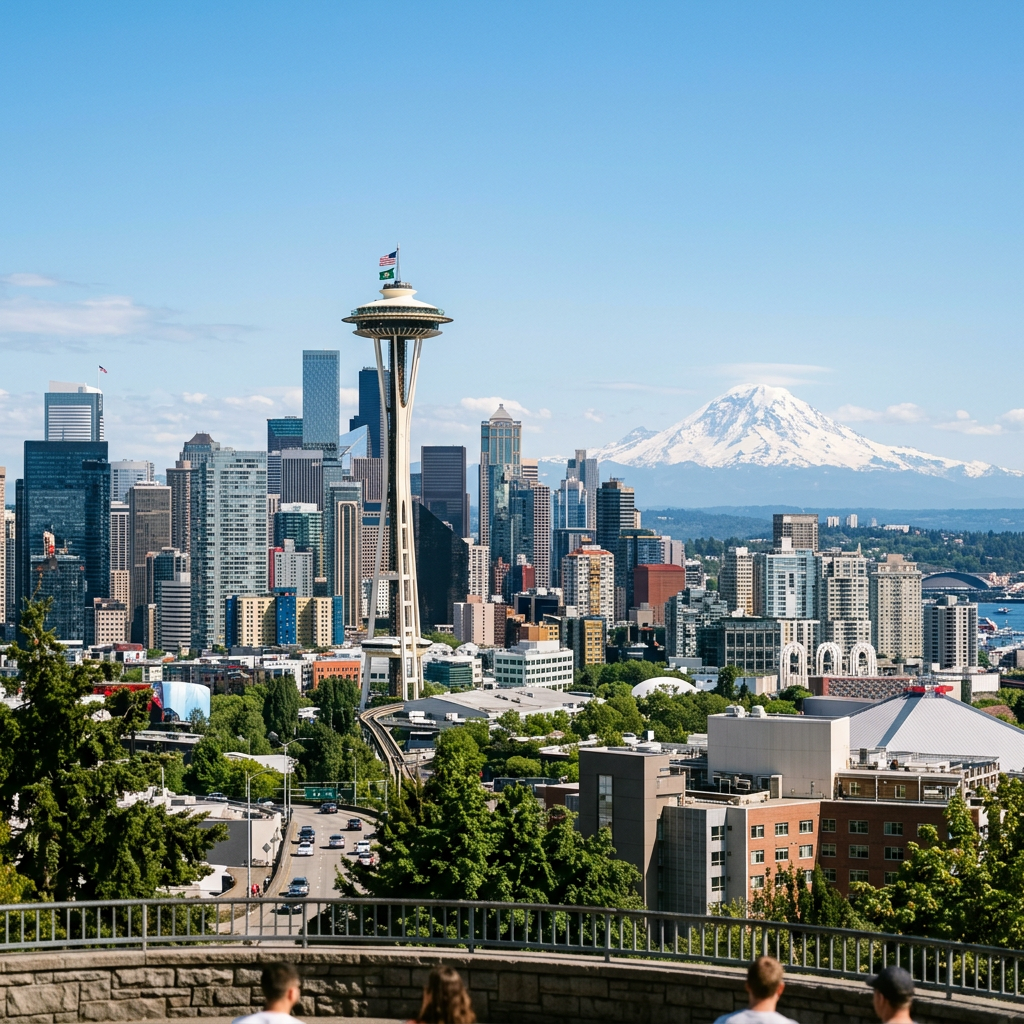
Seattle's small businesses operate in Big Tech's backyard, and that's both their greatest challenge and their greatest opportunity. In a city where Amazon, Microsoft, and Google employ over 150,000 people combined, small businesses face elevated costs, intense talent competition, and customers with expectations shaped by the world's most sophisticated technology companies.
But proximity to Big Tech also means Seattle's 200,000+ small businesses have access to cutting-edge AI tools, world-class talent, and a technology ecosystem that makes enterprise-grade capabilities available at small business prices. The businesses thriving in Seattle in 2026 are the ones leveraging that paradox.
The Seattle Business Environment
The Seattle metro area's economy exceeds $430 billion in GDP, making it one of the most productive regions in the country on a per-capita basis. But the economic landscape is dominated by a handful of technology giants whose presence shapes every aspect of the business environment:
- Talent costs: Software engineers in Seattle earn $150,000-$250,000+ at Big Tech companies. Even non-technical roles command significant premiums. Small businesses compete for talent against companies offering six-figure salaries and comprehensive benefits.
- Commercial real estate: Tech company expansion has driven office rents to $40-$55/sq ft in prime areas, with retail spaces in tech-heavy neighborhoods (South Lake Union, Capitol Hill, Fremont) commanding premium prices.
- Consumer expectations: Seattle residents — many of whom work in technology — expect seamless digital experiences, fast service, and data-driven personalization from every business they interact with.
For small businesses, AI is the tool that levels this playing field.
How Seattle Small Businesses Are Competing with AI
Retail and E-Commerce
Operating a retail business in Amazon's hometown requires extraordinary differentiation and operational efficiency. Seattle's independent retailers — bookstores, specialty food shops, outdoor gear stores, boutiques — survive and thrive by offering experiences and expertise that e-commerce giants can't replicate, enhanced by AI that makes their operations just as efficient.
A specialty outdoor gear shop in Ballard uses AI for inventory demand forecasting (predicting which items will sell based on season, weather patterns, and local outdoor event calendars), personalized customer communication (tailored product recommendations based on purchase history and outdoor activity preferences), and pricing optimization (competitive analysis against both local competitors and Amazon).
The store's owner told the Puget Sound Business Journal: "We can't compete with Amazon on price or selection. But we can compete on expertise and experience — and AI lets us deliver that expertise at scale while keeping our operations lean enough to survive in this market."
Coffee and Food Service
Seattle has approximately 2,500 coffee shops — the highest density of any city in the world. In this hypercompetitive market, margins are razor-thin, and the difference between success and failure often comes down to operational efficiency.
AI helps Seattle coffee shops with:
- Demand prediction: Forecasting busy periods based on weather (Seattle's rain patterns significantly affect foot traffic), nearby events, and day-of-week patterns
- Inventory optimization: Ordering the right amount of milk, pastries, and specialty ingredients to minimize waste while never running out
- Labor scheduling: Matching staffing levels to predicted demand, hour by hour
- Customer personalization: Building loyalty through AI that remembers preferences and suggests new items based on taste profiles
A four-location specialty coffee company in Capitol Hill and Fremont implemented AI across all four areas. Annual savings: $65,000 in reduced waste and labor optimization. But more importantly, customer satisfaction scores increased because lines moved faster and favorite drinks were always available.
Maritime and Port-Related Services
The Port of Seattle is the fourth-largest container port on the West Coast, handling $75+ billion in trade annually. Thousands of small businesses — customs brokers, freight forwarders, ship chandlers, marine services, and logistics companies — support this maritime economy.
AI helps these businesses optimize operations in a complex, time-sensitive environment:
- Vessel arrival prediction: AI models predict actual arrival times more accurately than carrier estimates, allowing service companies to prepare and staff efficiently
- Document processing: Automating customs documentation, bills of lading, and compliance filings
- Route and load optimization: For trucking and logistics companies serving the port
- Demand forecasting: Predicting cargo volumes based on trade data, economic indicators, and shipping patterns
A customs brokerage in SoDo serving Port of Seattle importers reduced average clearance time by 45% using AI document processing. In an industry where delays cost importers $300-$500 per container per day in demurrage charges, faster clearance translates directly into competitive advantage and customer retention.
Technology Services
Seattle's tech ecosystem generates enormous demand for small technology services companies — IT support, cybersecurity, cloud consulting, custom development, and managed services. These businesses serve both the tech giants themselves (as specialized contractors) and the broader business community.
AI helps these businesses with:
- Ticket triage and resolution: AI-powered help desk systems that categorize, prioritize, and sometimes resolve support tickets automatically
- Security monitoring: AI that detects threats and anomalies across client networks
- Proposal automation: Generating customized proposals based on client needs and historical project data
- Resource planning: Predicting which projects will need which skills and when
A 20-person managed IT services company in Bellevue uses AI for ticket triage and predictive maintenance. The AI automatically resolves 40% of Tier 1 tickets without human intervention, and predictive alerts prevent 60% of the system failures that previously generated emergency support calls. The company serves 30% more clients than before AI implementation, with higher satisfaction scores.
Healthcare
Seattle's healthcare market is sophisticated and demanding. Major systems like UW Medicine, Swedish, and Providence serve a population that expects technology-forward healthcare experiences. Small practices must meet those expectations to retain patients.
A physical therapy practice with locations in Green Lake and Redmond uses AI for automated insurance verification (reducing administrative time by 6 hours per day), patient engagement (personalized exercise reminders and progress tracking), and scheduling optimization. Revenue per therapist increased 22% — entirely from better utilization of existing appointment slots.
The Seattle AI Ecosystem Advantage
Seattle offers small businesses unique advantages for AI adoption:
Early access: Many AI companies launch products in Seattle first, offering early-adopter pricing and local support. Being in the same city as the companies building AI tools provides access that businesses in other markets don't have.
Talent availability: While Big Tech pays top dollar for full-time employees, Seattle also has a large pool of technology professionals available for consulting, freelancing, and part-time work. Many Big Tech employees moonlight as AI consultants for small businesses.
Community knowledge: Seattle's tech meetup scene is one of the most active in the country. AI-focused events happen weekly, providing free education and networking for small business owners exploring AI adoption.
Infrastructure: Seattle's cloud infrastructure (AWS headquarters, Microsoft Azure presence, Google Cloud offices) means businesses have world-class connectivity and computing resources available.
The Financial Case
Washington state has no income tax — both personal and corporate. This means every dollar saved through AI flows directly to the business owner or into reinvestment. Combined with the high baseline costs of operating in Seattle, the financial case for AI is among the strongest of any U.S. city:
- Automating 20 hours/week of administrative work saves $35,000-$52,000 annually at Seattle labor rates
- Improving marketing efficiency by 30% matters enormously when customer acquisition costs are elevated by competition
- Reducing inventory waste by 25% saves proportionally more when goods and storage cost more
Getting Started for Seattle Business Owners
Step 1: Audit your Big Tech dependencies. Many Seattle businesses already use AWS, Microsoft 365, or Google Workspace. These platforms have built-in AI features you may not be using — activate them before buying new tools.
Step 2: Focus on differentiation. In Seattle's competitive market, AI should enhance what makes your business unique — whether that's customer expertise, local knowledge, or service quality.
Step 3: Tap into the talent pool. Seattle's AI talent pool is among the deepest in the world. University of Washington, freelance consultants, and part-time Big Tech employees can all support your AI implementation at rates that may surprise you.
Step 4: Join the community. Seattle AI meetups, the Seattle Chamber of Commerce technology programs, and organizations like the Technology Alliance connect small businesses with AI resources and peer experiences.
Seattle's Small Business AI Future
Competing with Big Tech sounds daunting. But Seattle's small businesses have always done it — not by matching scale, but by offering what corporations can't: personal relationships, local expertise, authentic experiences, and the agility to adapt quickly.
AI doesn't change that formula. It amplifies it. The coffee shop that knows your name now also predicts your order. The outdoor gear shop with expert staff now uses AI to stock exactly what the season demands. The customs broker who's navigated Port of Seattle for 20 years now processes documents in minutes instead of hours.
In Big Tech's backyard, the smallest businesses are using AI to compete — and win.
Frequently Asked Questions
How can Seattle small businesses compete with Big Tech using AI?
AI doesn't make small businesses into tech giants. It amplifies what makes them unique: personal relationships, local expertise, and agility. A specialty outdoor gear shop uses AI for inventory and personalization while competing on expertise. A coffee chain uses AI for operations while competing on craft and community. AI handles the efficiency; humans deliver the experience.
Does Big Tech's presence in Seattle help or hurt small business AI adoption?
Both. The challenges include elevated costs and talent competition. The benefits are significant: early access to AI tools (many launch in Seattle first), a deep pool of technology talent available for consulting, world-class tech meetups providing free education, and customers who expect and appreciate AI-enhanced experiences.
What AI applications are unique to Seattle's maritime economy?
Port of Seattle businesses use AI for vessel arrival prediction, customs document processing (reducing clearance time by 45%), route and load optimization for trucking, and cargo volume forecasting. In an industry where container delays cost $300-$500/day in demurrage, AI speed improvements translate directly into competitive advantage.