AI for Indianapolis Small Businesses: America's #1 City for New Business Growth
Key Takeaways
- Indianapolis has the HIGHEST small business growth rate of any U.S. city, a staggering +361% year-over-year (Bluevine 2025 Small Business Growth Report).
- The Crossroads of America: 6 major interstate highways converge in Indianapolis (more than any other U.S. city), making it a logistics and distribution powerhouse.
- Eli Lilly is investing $9B+ in Indiana manufacturing, anchoring a life sciences ecosystem that generates billions in economic activity.
- Indianapolis metro GDP exceeds $160 billion, with a cost of living 13% below the national average, maximizing AI ROI for every business dollar invested.
- FedEx's second-largest U.S. hub processes 100,000+ packages daily through Indianapolis International Airport, driving massive logistics demand.
Indianapolis has quietly become the most exciting city in America for small business owners, and the data proves it. Bluevine's 2025 Small Business Growth Report ranked Indianapolis #1 in the entire United States for small business growth, with a staggering +361% year-over-year increase in new business formation. That is not a typo. While coastal cities grab headlines with billion-dollar tech valuations, Indianapolis is experiencing the most explosive small business boom in the country.
The reasons are structural and sustainable. Indianapolis offers a cost of living 13% below the national average, according to the Bureau of Economic Analysis, meaning every dollar invested in your business stretches further here than in virtually any other major metro. The city sits at the literal crossroads of America, where six major interstate highways converge (I-65, I-69, I-70, I-74, I-465, and I-865), more than any other U.S. city. FedEx operates its second-largest hub at Indianapolis International Airport, processing over 100,000 packages daily. The Indianapolis metro GDP exceeds $160 billion.
For the thousands of new businesses launching in Indianapolis every month, AI is not a future consideration. It is the tool that lets you build smart from day one. At Adominus Intelligence, we help Indianapolis businesses deploy AI solutions that deliver measurable ROI within 90 days.
Logistics & Distribution: The Crossroads of America
Indianapolis earned its nickname honestly. The convergence of six interstate highways, a world-class airport with FedEx's second-largest hub, and extensive rail infrastructure operated by CSX and Norfolk Southern make Indianapolis one of the most important logistics nodes in North America. You can reach 75% of the U.S. population within a day's drive from Indianapolis.
AI applications transforming Indianapolis logistics:
- Route optimization: AI algorithms that calculate the fastest, most fuel-efficient routes across Indianapolis's interstate network, reducing delivery times by 15-25% and fuel costs by 10-20%
- Warehouse automation and inventory management: Predictive models that forecast demand, optimize warehouse layouts, and automate picking and packing processes
- Demand forecasting: AI that predicts shipment volumes weeks in advance, enabling better staffing, capacity planning, and carrier negotiations
- Last-mile delivery optimization: Intelligent routing for the growing e-commerce fulfillment operations concentrated around the airport corridor
- Fleet management: Predictive maintenance that reduces vehicle downtime by 30-40% and extends fleet life
A mid-size distribution company near Indianapolis International Airport implemented AI for route optimization and demand forecasting. Delivery costs dropped 18%, on-time delivery rates improved to 97%, and they eliminated the need for two additional delivery vehicles they had planned to purchase, saving over $180,000 in capital expenditure.
Advanced Manufacturing
Indianapolis has a deep manufacturing heritage that is evolving rapidly into advanced, technology-driven production. Rolls-Royce operates a major aerospace manufacturing facility in Indianapolis. Eli Lilly's $9 billion+ investment in Indiana manufacturing is creating an enormous pharmaceutical production ecosystem. Cummins, Allison Transmission, and Roper Technologies anchor an industrial base that demands precision, efficiency, and quality.
AI applications for Indianapolis manufacturers:
- - **Predictive maintenance**
- AI monitors equipment vibration, temperature, and performance data to predict failures days or weeks before they occur, reducing unplanned downtime by up to 40%
- - **Quality control**
- Computer vision systems that inspect products at production speed, catching defects that human inspectors miss
- - **Production scheduling optimization**
- AI that maximizes throughput by intelligently sequencing jobs, balancing machine loads, and accounting for supply chain lead times
- - **Supply chain intelligence**
- Predictive models that forecast raw material pricing, identify supply disruptions before they impact production, and optimize vendor relationships
A precision machining company on the southwest side of Indianapolis deployed AI quality inspection and predictive maintenance. Defect rates dropped from 2.8% to 0.3%, and unplanned downtime decreased 45%, adding over $500,000 in annual production capacity without purchasing new equipment.
Healthcare & Life Sciences
Eli Lilly (one of the largest pharmaceutical companies in the world) is headquartered in Indianapolis, and its $9 billion+ investment in Indiana manufacturing facilities is transforming the region's life sciences landscape. Major hospital systems including IU Health (Indiana's largest), Community Health Network, Franciscan Health, and Ascension St. Vincent serve the Indianapolis metro population of over 2 million.
AI applications for Indianapolis healthcare businesses:
- - **Revenue cycle optimization**
- AI reduces claim denials by identifying coding errors before submission, critical for the independent practices and billing companies serving Indianapolis's hospital systems
- - **Patient scheduling and engagement**
- Predictive models that reduce no-shows by 25-40% and automate appointment reminders and follow-ups
- - **Clinical operations**
- AI-assisted diagnosis coding, treatment protocol recommendations, and drug interaction checking
- - **Pharmaceutical supply chain**
- For businesses supporting Eli Lilly's manufacturing expansion, AI optimizes inventory management, regulatory compliance tracking, and quality assurance documentation
An independent primary care practice group with locations across Marion and Hamilton Counties implemented AI for billing automation and patient engagement. Claim denial rates dropped 38%, no-show rates decreased 32%, and annual revenue increased by over $350,000.
Motorsports & Sports Business
Indianapolis is the racing capital of the world. The Indianapolis Motor Speedway (home of the Indy 500) is the largest sporting venue on earth, seating over 250,000 spectators. The NCAA is headquartered in Indianapolis. The Indiana Pacers (NBA), Indianapolis Colts (NFL), and Indy Eleven (USL) create a robust sports ecosystem. Lucas Oil Stadium hosts major events year-round.
AI applications for Indianapolis sports businesses:
- - **Event logistics optimization**
- AI that predicts attendance, optimizes parking and traffic flow, and coordinates vendor operations for events drawing 100,000+ spectators
- - **Dynamic ticket pricing**
- Revenue optimization models that adjust pricing based on demand signals, opponent matchups, weather forecasts, and historical patterns
- - **Fan engagement and personalization**
- AI-powered marketing that personalizes communications, merchandise recommendations, and experience packages for season ticket holders and one-time visitors
- - **Sponsorship analytics**
- ROI measurement and optimization for the businesses that sponsor teams, events, and venues across Indianapolis's sports landscape
A hospitality group that operates near the Indianapolis Motor Speedway implemented AI demand forecasting tied to the racing calendar. Revenue during the Month of May increased 28% while food waste decreased 35%. The AI predicted customer volume with 92% accuracy across practice days, qualifying, and race day.
Agriculture Technology
Indiana is a top-10 agricultural state, producing billions of dollars in corn, soybeans, and livestock annually. Indianapolis sits at the center of this agricultural economy, and a growing cluster of agri-tech businesses are using AI to modernize farming operations and agricultural supply chains.
- - **Precision agriculture**
- AI analyzes satellite imagery, soil data, weather patterns, and crop health indicators to optimize planting, irrigation, and harvest timing
- - **Agricultural supply chain optimization**
- Demand forecasting and logistics management for grain elevators, food processors, and agricultural distributors
- - **Equipment and fleet management**
- Predictive maintenance for farming equipment fleets, critical during time-sensitive planting and harvest windows
- - **Crop management and pest detection**
- Computer vision that identifies disease and pest issues before they spread, reducing crop losses and chemical usage
Insurance
Indianapolis is a major insurance hub. Companies like Anthem (Elevance Health), OneAmerica, and Erie Indemnity have significant operations in the metro area. The concentration of insurance expertise creates demand for AI across the industry.
- - **Claims processing automation**
- AI that reviews, validates, and routes insurance claims, reducing processing time by 50-70% and catching fraudulent patterns
- - **Risk assessment and underwriting**
- Machine learning models that evaluate risk more accurately and consistently than traditional actuarial methods
- - **Customer service automation**
- Chatbots and virtual agents that handle policyholder inquiries, claims status updates, and coverage questions 24/7
- - **Policy document management**
- AI that extracts, organizes, and analyzes information from unstructured insurance documents
Indianapolis-Specific Challenges AI Solves
+361% Growth Means Thousands of New Businesses Need Systems Now
The most extraordinary aspect of Indianapolis's +361% small business growth rate is what it implies: thousands of brand-new businesses are launching every month, and most of them don't yet have sophisticated operational systems. They're building from scratch. This is the blue-ocean AI opportunity. These businesses can implement AI from day one rather than retrofitting it into legacy processes. Starting with AI-native operations gives Indianapolis's new businesses a structural advantage over established competitors still running on spreadsheets and manual workflows.
Competing for Workers in a Tight Midwest Labor Market
Indianapolis's unemployment rate remains low, and the combination of Amazon distribution centers, Eli Lilly's manufacturing expansion, and the broader logistics boom is creating fierce competition for hourly and skilled workers. AI automation directly addresses this by reducing the labor requirements for repetitive tasks, letting businesses accomplish more with their existing teams while competing for talent on the basis of interesting, meaningful work rather than just wages.
Transitioning from Traditional to Digital Economy
Indianapolis's economy has deep roots in manufacturing, agriculture, and insurance, industries that have historically been slower to adopt new technology. The city is in the middle of a generational transition toward a more digital, technology-driven economy. AI is the bridge that helps traditional Indianapolis businesses modernize without abandoning the operational expertise that made them successful. A manufacturing company doesn't need to become a tech company. It needs AI tools that make its manufacturing better.
Lower AI Awareness Than Coastal Cities
Indianapolis doesn't have the AI saturation of Seattle, San Francisco, or New York. Most local business owners know AI is important but haven't had access to practical, affordable guidance on how to implement it. This creates an enormous educational opportunity, and a competitive advantage for the businesses that move first. When your competitors are still Googling "what is AI for business," deploying even basic automation puts you months ahead.
Indianapolis Neighborhoods & Communities We Serve
- - **Downtown / Mile Square**
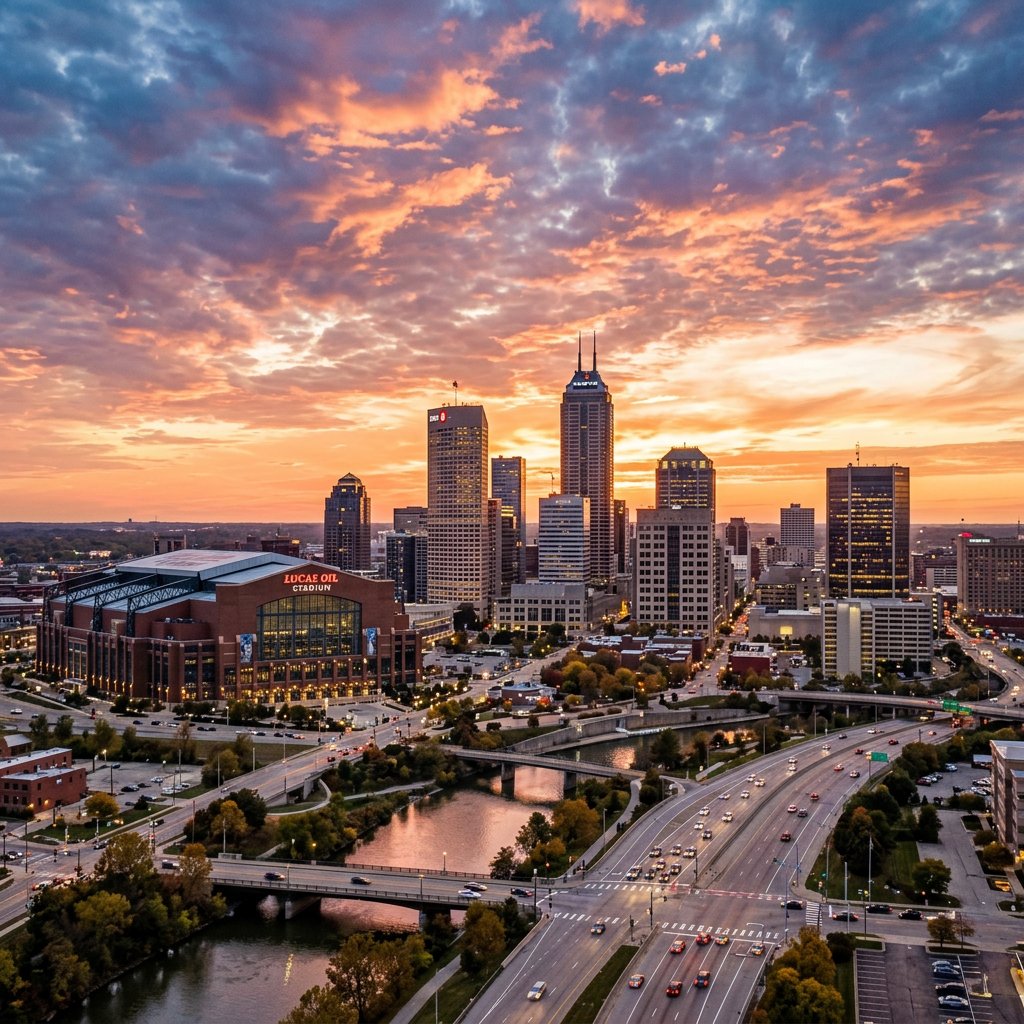
- The commercial heart of Indianapolis, home to corporate headquarters, professional services firms, and the convention and hospitality economy centered around the Indiana Convention Center and Lucas Oil Stadium
- - **Mass Ave (Massachusetts Avenue)**
- Indianapolis's arts and cultural district, home to independent restaurants, galleries, boutique retail, and creative agencies thriving in one of the city's most vibrant corridors
- - **Fountain Square**
- A rapidly growing creative and entrepreneurial neighborhood with restaurants, breweries, small manufacturers, and tech startups
- - **Broad Ripple**
- A dining, nightlife, and independent retail destination that serves as a neighborhood commercial hub for north-central Indianapolis
- - **Carmel**
- Ranked the #1 small city in America by Niche.com, Carmel's booming commercial corridor along US-31 is home to corporate offices, healthcare facilities, and upscale retail
- - **Fishers**
- One of the fastest-growing suburbs in Indiana, with a thriving tech startup scene centered around the Launch Fishers entrepreneurship center and Fishers District
- - **Noblesville**
- Hamilton County's county seat and a growing suburban commercial center with manufacturing, healthcare, and professional services businesses
- - **Greenwood**
- A major retail and logistics hub on Indianapolis's south side, strategically positioned along I-65 for distribution operations
- - **16 Tech Innovation District**
- Indianapolis's emerging innovation corridor near downtown, designed to foster collaboration between life sciences, technology, and advanced manufacturing businesses
Getting Started for Indianapolis Business Owners
Indianapolis's +361% small business growth rate means the window for early-mover advantage is wide open. Your competitors are still figuring out what AI can do, you can be implementing it.
Step 1: Identify your capacity constraint. In a city growing this fast, the bottleneck is usually operational capacity, not demand. Find where manual processes are limiting your ability to serve more customers or fulfill more orders.
Step 2: Start with the highest-ROI application. For logistics businesses, that's route optimization and demand forecasting. For manufacturers, predictive maintenance. For healthcare, billing automation. For new businesses, AI-native operations from day one.
Step 3: Leverage Indianapolis's cost advantage. AI tools cost the same everywhere, but your lower operating costs mean the ROI is amplified. Every hour of labor you automate saves more relative to your cost structure than it would in a coastal city.
Explore our AI consulting services for Indianapolis businesses →
Frequently Asked Questions
Why does Indianapolis have the highest small business growth rate in America?
Bluevine's 2025 report shows +361% YOY growth driven by a cost of living 13% below the national average, six converging interstate highways (more than any other U.S. city), Eli Lilly's $9B+ manufacturing investment, a diverse economy spanning logistics/manufacturing/healthcare/sports, and a business-friendly regulatory environment. Indianapolis offers the affordability of the Midwest with the infrastructure of a top-tier logistics hub.
How does AI help Indianapolis logistics companies?
With six interstates and FedEx's second-largest hub processing 100,000+ packages daily, Indianapolis is a logistics powerhouse. AI delivers route optimization (15-25% cost reduction), demand forecasting, warehouse automation, fleet predictive maintenance (30-40% less downtime), automated carrier selection, and last-mile delivery intelligence. Distribution companies report saving $150,000-$200,000+ annually through AI-driven operational improvements.
What AI applications work for Indianapolis manufacturers?
Rolls-Royce, Eli Lilly's supply chain, Cummins, and Allison Transmission set the quality bar in Indianapolis manufacturing. AI helps with predictive maintenance (reducing unplanned downtime by 40%), computer vision quality control, production scheduling optimization, and supply chain intelligence. A local precision machining company reduced defect rates from 2.8% to 0.3% using AI quality inspection.
Is AI affordable for new businesses in Indianapolis?
Yes — and Indianapolis's cost advantage amplifies the ROI. AI tools cost the same everywhere ($200-$1,000/month for most applications), but your lower operating costs mean proportionally greater savings. New businesses benefit most: starting with AI-native operations from day one avoids the costly retrofitting that established businesses face later. Most clients see positive ROI within 90 days.