Denver's Small Business AI Opportunity in 2026
Key Takeaways
- Denver has 160,000+ small businesses and a top-5 startup formation rate in the U.S.
- The outdoor recreation economy ($35B+ in Colorado) creates unique seasonal demand patterns ideal for AI optimization.
- Denver's cannabis industry (the most mature legal market in the U.S.) is pioneering AI applications for inventory, compliance, and retail.
- Colorado's aerospace sector (Lockheed Martin, Ball Aerospace, United Launch Alliance) creates AI-ready defense and tech supply chains.
- Denver's quality-of-life appeal attracts remote workers and tech talent, creating a sophisticated consumer base that expects AI-enhanced experiences.
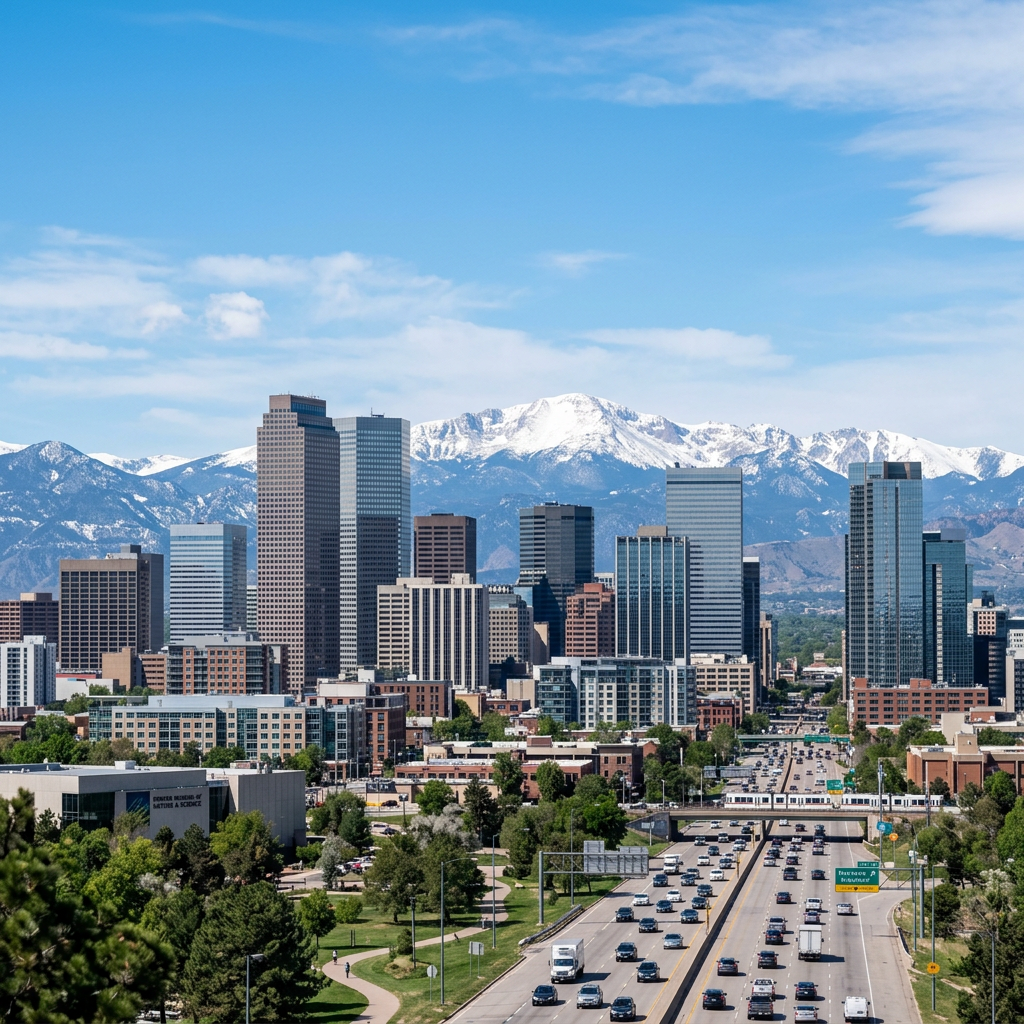
Denver's small business scene is as dynamic as the Rocky Mountain backdrop that defines the city. With 160,000+ small businesses, a top-five startup formation rate, and an economy powered by outdoor recreation, aerospace, cannabis, technology, and tourism, the Mile High City offers a business environment where AI adoption isn't just an advantage. It's increasingly the price of admission.
Denver's Business Landscape
The Denver metro area's economy has grown faster than the national average for most of the past decade. Population growth, corporate relocations, and a quality-of-life appeal that attracts entrepreneurs and remote workers have created a vibrant but increasingly competitive market.
Key economic drivers that shape small business opportunities:
- - **Outdoor recreation**
- Colorado's $35+ billion outdoor recreation economy (Colorado Outdoor Industry Office, 2025) drives thousands of small businesses — gear shops, tour operators, fitness studios, adventure companies, and outdoor hospitality.
- - **Cannabis**
- Colorado was the first state to legalize recreational cannabis. The industry generated $1.8 billion in sales in 2024, supporting thousands of dispensaries, cultivators, and ancillary businesses.
- - **Aerospace and defense**
- Lockheed Martin, Ball Aerospace, Raytheon, and United Launch Alliance anchor a defense ecosystem that supports thousands of small contractors and suppliers.
- - **Technology**
- Denver's tech sector has grown 40% since 2020, with companies attracted by lower costs than the coasts and access to outdoor-loving technical talent.
- - **Tourism**
- Denver International Airport (the third-busiest in the U.S.) serves as the gateway to Colorado's ski resorts, national parks, and outdoor attractions.
AI Applications Across Denver's Key Sectors
Outdoor Recreation and Tourism
Denver's outdoor economy is inherently seasonal and weather-dependent — making it an ideal candidate for AI optimization.
Ski rental shops along I-70 (Georgetown, Idaho Springs, Silverthorne) use AI demand forecasting to predict rental volumes based on snow conditions, resort bookings, and highway traffic data. A rental shop in Frisco reduced idle inventory by 30% while never running out of popular sizes during peak weekends — a $45,000 annual improvement.
Adventure tour companies use AI for dynamic pricing (adjusting based on demand, weather, group size, and competitive pricing), weather-adjusted scheduling (proactively rescheduling when conditions are unsuitable), and personalized marketing (targeting customers based on their activity preferences and experience levels).
A whitewater rafting company on the Arkansas River uses AI to price trips dynamically — charging premium rates for peak summer weekends with perfect conditions and offering discounts to fill capacity during shoulder season. Revenue per trip increased 18% without any decrease in bookings.
Cannabis Industry
Colorado's cannabis industry is one of the most regulated and data-intensive sectors in the country. State compliance requirements for seed-to-sale tracking, inventory management, and reporting create a natural use case for AI.
Dispensaries use AI for demand forecasting (predicting which products will sell based on day of week, weather, local events, and historical patterns), inventory optimization (avoiding both stockouts and the carrying costs of slow-moving inventory), and customer personalization (recommending products based on purchase history and preferences).
A multi-location dispensary in Denver implemented AI inventory management and reduced waste on perishable products by 45% while improving in-stock rates to 97%. The compliance monitoring AI also flagged three potential reporting errors that could have resulted in state penalties.
Cultivators use AI for crop yield optimization, pest detection, environmental monitoring, and harvest timing — applications that are increasingly common in precision agriculture but particularly valuable in the controlled-environment cannabis cultivation space.
Aerospace and Defense
Small businesses serving Colorado's aerospace sector face familiar challenges: complex compliance requirements, competitive bidding processes, and demanding quality standards. AI helps with proposal automation, quality inspection, supply chain management, and compliance documentation.
A precision machining company in Littleton uses AI-powered quality inspection (computer vision systems that detect micro-defects invisible to the human eye) and predictive maintenance (alerting operators when CNC machines need calibration or maintenance before producing out-of-spec parts). Defect rates dropped from 3% to 0.4%, winning them new contracts that required higher quality certifications.
Food and Craft Beverage
Denver's food and craft beverage scene (the city has more craft breweries per capita than almost any major city) is highly competitive. AI helps restaurants and breweries with demand forecasting, menu/recipe optimization, and customer engagement.
A craft brewery in RiNo uses AI to predict taproom traffic, optimize beer production schedules, and manage their distribution relationships. The forecasting model incorporates weather, events at nearby venues (Mission Ballroom, Ball Arena), and even social media mentions to anticipate demand with 88% accuracy — up from the 65% accuracy of their previous manual forecasting.
Real Estate and Construction
Denver's real estate market has been one of the hottest in the country, with home prices increasing dramatically since 2015. Small brokerages, property managers, and construction companies use AI for market analysis, lead scoring, project estimation, and customer engagement.
A property management company managing 200+ rental units across Denver, Aurora, and Lakewood uses AI for rent optimization (analyzing market data to set competitive but profitable rents), maintenance prediction (identifying units likely to need repairs before they become emergencies), and tenant communication automation. Operating costs decreased 15% while tenant satisfaction scores improved.
Denver's Cost Advantage
Denver offers a compelling middle ground for AI adoption. Costs are significantly lower than coastal cities but the market is sophisticated enough to demand modern technology:
- - **Office space**
- $25-$35/sq ft average, roughly half of San Francisco and 40% less than Seattle
- - **Labor costs**
- 10-20% lower than coastal tech hubs for comparable roles
- - **Quality of life**
- Denver's outdoor lifestyle attracts talent that might otherwise only consider coastal cities, giving SMBs access to a strong workforce
This means AI investments stretch further in Denver while serving a customer base that expects tech-forward experiences.
Getting Started for Denver Business Owners
Step 1: Address your seasonal challenge first. If your business has seasonal demand variation (and in Colorado, most do), AI demand forecasting is your highest-ROI starting point.
Step 2: Explore your compliance opportunity. Cannabis businesses, aerospace contractors, and healthcare providers all face complex compliance requirements. AI compliance tools reduce risk and free up skilled staff.
Step 3: Connect with Denver's tech community. The Denver Startup Week community, Galvanize, Innosphere Ventures, and the Denver Metro SBDC all offer technology resources for small businesses.
Step 4: Think about your outdoor economy connection. Even if you're not directly in outdoor recreation, Denver's economy is influenced by it. Restaurants near ski corridors, retail near trailheads, and services in mountain communities all benefit from AI that understands the outdoor lifestyle cycle.
Denver's AI Outlook
Denver's small business community is well-positioned to lead in AI adoption. The city's combination of tech-savvy residents, diverse industry sectors, seasonal complexity, and a culture that embraces innovation creates fertile ground for AI-powered business growth.
The mountains aren't going anywhere. But the businesses that thrive in their shadow are evolving — and AI is the tool that's making it possible.
Frequently Asked Questions
How does AI help Denver businesses manage seasonal demand?
Denver's economy has extreme seasonal variation tied to outdoor recreation, tourism, and weather. AI demand forecasting helps ski rental shops, restaurants, tour operators, and retail businesses predict and prepare for seasonal swings. A ski rental shop in Frisco reduced idle inventory 30% while never running out of popular sizes during peak weekends.
What AI applications work for Colorado's cannabis industry?
Cannabis businesses use AI for demand forecasting, inventory optimization (reducing waste on perishable products by 45%), compliance monitoring (flagging potential reporting errors before they become penalties), customer personalization, and cultivation optimization (yield prediction, pest detection, harvest timing).
How is Denver's aerospace sector creating AI opportunities?
Lockheed Martin, Ball Aerospace, and their supply chains create demand for precision manufacturing and specialized services. Small manufacturers use AI for quality inspection (reducing defect rates from 3% to 0.4%), predictive maintenance, and compliance documentation — meeting the exacting standards that aerospace contracts require.