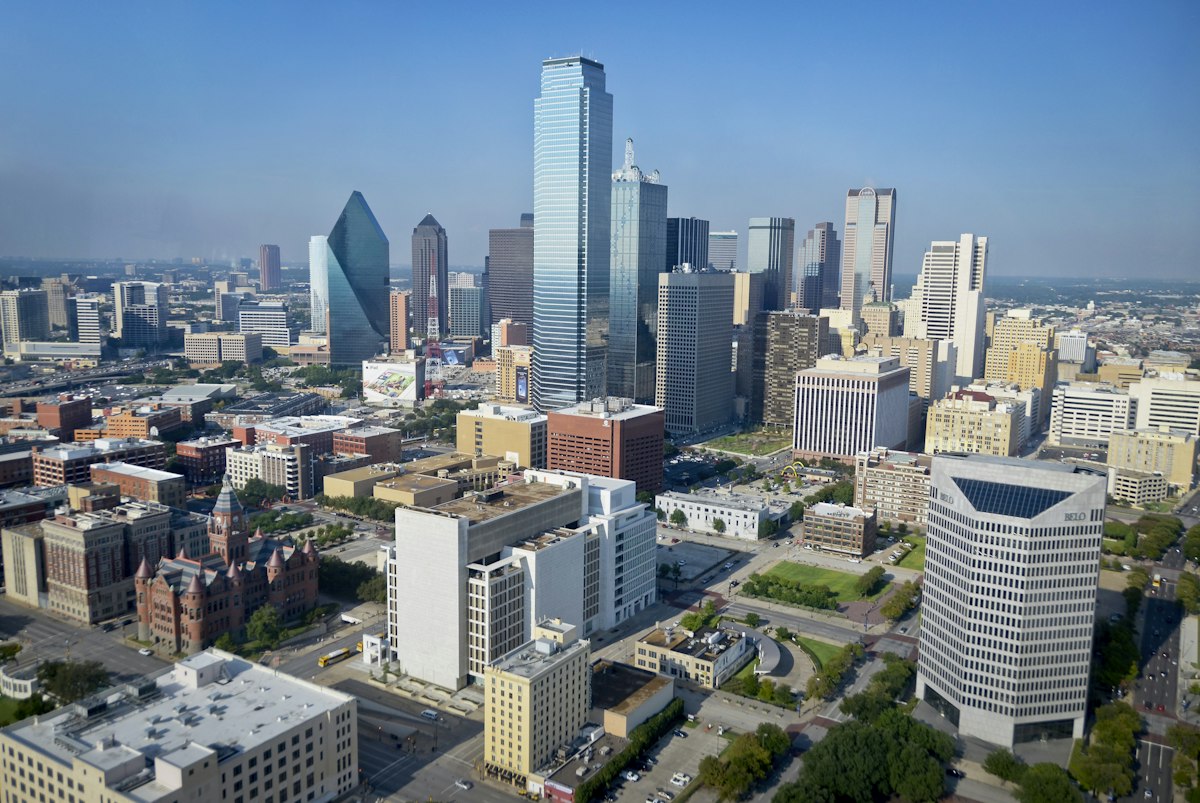
Dallas-Fort Worth Small Businesses Are Embracing AI: Here's How
Key Takeaways
- The DFW metroplex has 400,000+ small businesses and a $600B+ GDP — the 4th-largest metro economy in the U.S.
- 24 Fortune 500 companies call DFW home, raising the competitive bar that AI helps SMBs clear.
- DFW's logistics infrastructure (DFW Airport, freight rail, highways) makes AI supply chain optimization particularly valuable.
- Corporate relocations from California and New York bring sophisticated consumer expectations that AI helps small businesses meet.
- Texas has no state income tax — the savings that AI generates flow entirely to business owners and reinvestment.
Dallas-Fort Worth's small business community is embracing AI at a pace that mirrors the metroplex's explosive growth. With 400,000+ small businesses, a GDP exceeding $600 billion, and 24 Fortune 500 headquarters, the DFW metroplex is one of America's most dynamic and most competitive business environments. AI is increasingly how small businesses compete against corporate giants and each other.
This article examines the AI adoption landscape across DFW, with specific examples, local data, and practical guidance for business owners from Frisco to Fort Worth.
DFW: A Business Environment Built on Scale
The Dallas-Fort Worth metroplex is the fourth-largest metro economy in the United States, behind only New York, Los Angeles, and Chicago. But unlike those metros, DFW has been growing at a staggering pace. The metro area added over 170,000 new residents in 2024 alone (U.S. Census Bureau), bringing the total population to approximately 8.1 million.
That growth engine is fueled by corporate relocations (Toyota, Charles Schwab, CBRE, Caterpillar, and dozens more have moved headquarters to DFW in recent years), a business-friendly tax environment (Texas has no state income tax), and logistics infrastructure that includes DFW International Airport (the fourth-busiest airport in the world) and one of the nation's densest freight rail networks.
For small businesses, the DFW environment presents a paradox: enormous opportunity driven by population growth and economic expansion, but fierce competition from well-resourced enterprises that have deep pockets and sophisticated technology stacks.
AI is the bridge that helps small businesses access enterprise-level capabilities at SMB budgets.
How DFW Small Businesses Are Leveraging AI
Corporate Services and B2B Sales
DFW's dense concentration of Fortune 500 companies and corporate headquarters creates a massive B2B market for small businesses: catering companies, office supply distributors, IT services, staffing agencies, commercial cleaning companies, and marketing firms all compete for corporate contracts.
AI helps these businesses compete for and manage corporate accounts more effectively. A staffing agency in Plano uses AI to match candidates to positions based on skills, culture fit, salary expectations, and historical placement success rates. Their fill rate improved from 72% to 89%, and average time-to-fill decreased by 35%, making them more competitive against national staffing chains.
A commercial cleaning company serving office buildings in Uptown and the Design District implemented AI for route optimization, quality monitoring, and predictive supply ordering. The efficiency gains allowed them to profitably compete on pricing against national franchises while maintaining superior service quality.
Retail and E-Commerce
DFW's retail landscape spans luxury shopping in Highland Park, sprawling suburban malls, and a booming e-commerce sector. AI helps retailers across this spectrum compete more effectively.
Independent retailers in Bishop Arts (Dallas) and the Stockyards (Fort Worth) use AI for inventory demand forecasting, personalized email marketing, and dynamic pricing. A vintage clothing retailer on Lower Greenville implemented AI-driven marketing personalization that segmented their customer base and delivered targeted campaigns. Email-driven revenue increased 150% in six months.
E-commerce businesses based in DFW (and there are thousands, leveraging the metro's logistics infrastructure) use AI for product recommendations, checkout optimization, returns prediction, and customer lifetime value modeling.
Real Estate and Construction
DFW's real estate market is one of the most active in the country, with home prices rising steadily as corporate relocations drive demand. Small real estate brokerages, property management companies, and construction firms use AI to compete against national chains.
AI lead scoring helps real estate agents prioritize prospects based on their likelihood to transact. A boutique brokerage in Southlake implemented AI-powered lead management and saw agents close 25% more deals per quarter while spending 30% less time on unqualified leads.
Construction companies use AI for project estimation (analyzing historical cost data, material price trends, and labor availability), scheduling optimization, and safety compliance monitoring. A mid-size commercial contractor in Arlington reduced bid preparation time by 45% using AI-assisted estimation tools.
Healthcare and Wellness
DFW's healthcare sector extends well beyond hospitals. Thousands of private practices, dental offices, chiropractic clinics, med spas, mental health practices, and home health agencies serve the metroplex's growing population. AI helps these businesses manage patient flow, reduce administrative burden, and improve marketing.
A multi-location dental practice across Plano, McKinney, and Allen implemented AI for appointment optimization, insurance verification, and patient reactivation campaigns. Annual revenue increased 18% primarily through reduced no-shows (down 40%) and reactivation of lapsed patients.
Food and Restaurant Industry
DFW's restaurant scene has exploded, with the metroplex now home to over 15,000 restaurants. Competition is intense, and margins are thin. AI helps restaurants survive and thrive.
Demand forecasting is particularly valuable in DFW because weather, events (Cowboys, Rangers, Mavericks, Stars games), and seasonal patterns create significant daily variation. A barbecue restaurant in Deep Ellum uses AI to forecast prep quantities based on day of week, weather, nearby event schedules, and social media mentions. Food waste decreased 30%, and the restaurant stopped running out of popular items on unexpectedly busy days.
The DFW AI Economy: Numbers That Matter
The Dallas Regional Chamber reported in 2025 that AI-related jobs in the metroplex grew 45% year-over-year — the fastest growth rate among major metros. This reflects both enterprise adoption and the growing small business demand for AI implementation support.
Key financial metrics for DFW SMB AI adoption:
- - **Average first-year ROI**
- 4.2x among businesses that implement with professional guidance
- - **Average cost savings**
- $67,000 per year for businesses with 10-50 employees
- - **Productivity improvement**
- 25-35% among customer-facing teams using AI tools
- - **Revenue impact**
- 15-22% average increase within 12 months of implementation
These numbers are particularly powerful in Texas, where the absence of state income tax means every dollar saved through AI flows directly to the business owner or into reinvestment.
Getting Started in DFW
Step 1: Define your competitive gap. In DFW, the most common gaps for small businesses are: not matching corporate competitors' response times, inability to serve enough clients without hiring, and inefficient use of the abundant data their businesses generate.
Step 2: Start where the money is. For B2B businesses, that usually means sales and client management AI. For consumer businesses, it's typically marketing personalization and customer service. For logistics and construction, it's estimation and scheduling.
Step 3: Tap into DFW's AI ecosystem. The Dallas Entrepreneur Center, Capital Factory (with a DFW location), the Fort Worth Business Assistance Center, and the DFW chapter of SCORE all offer technology adoption resources.
Step 4: Think region-wide. DFW isn't one market — it's dozens of sub-markets from Denton to Waxahachie, each with distinct demographics and business dynamics. AI helps you understand and serve each sub-market more effectively.
DFW's AI Trajectory
The Dallas-Fort Worth metroplex is positioned to be one of America's leading AI business hubs. The combination of Fortune 500 presence, rapid population growth, business-friendly policies, and world-class logistics infrastructure creates a business environment where AI adoption compounds into sustained competitive advantages.
For DFW's 400,000+ small businesses, AI isn't just a technology trend. It's the next chapter in the metroplex's relentless growth story. The businesses that embrace it now will ride that growth. Those that don't will increasingly feel the squeeze.
Frequently Asked Questions
How does AI help Dallas-Fort Worth small businesses compete with Fortune 500 companies?
AI gives DFW small businesses enterprise-level capabilities at SMB budgets: AI-powered CRMs for B2B sales, automated proposal generation, intelligent customer service, and data-driven marketing personalization. A staffing agency in Plano improved their fill rate from 72% to 89% using AI candidate matching — competing effectively against national chains.
What is the ROI of AI for DFW small businesses?
DFW businesses implementing AI with professional guidance report an average 4.2x first-year ROI, $67,000 in annual cost savings for 10-50 employee businesses, 25-35% productivity improvement, and 15-22% revenue increase within 12 months. Texas's lack of state income tax means these savings flow entirely to the business owner.
Which DFW industries benefit most from AI?
Corporate services and B2B sales, retail and e-commerce, real estate and construction, healthcare, and restaurants all show strong AI ROI in DFW. The specific highest-impact application varies: B2B businesses benefit from sales AI, restaurants from demand forecasting, and real estate from lead scoring and market analysis.