Boston's AI Ecosystem: What It Means for Small Businesses
Key Takeaways
- Boston has 150,000+ small businesses operating alongside MIT, Harvard, and the densest AI research ecosystem in the world.
- The city's biotech and life sciences corridor (Kendall Square to Seaport) creates AI opportunities for healthcare-adjacent SMBs.
- Boston's education and EdTech sector is pioneering AI-powered learning and training tools accessible to small businesses.
- The highest concentration of AI venture capital in the U.S. means Boston SMBs have access to cutting-edge tools before other markets.
- Harsh winters and seasonal tourism (4M+ visitors for foliage, Freedom Trail) make AI demand planning critical.
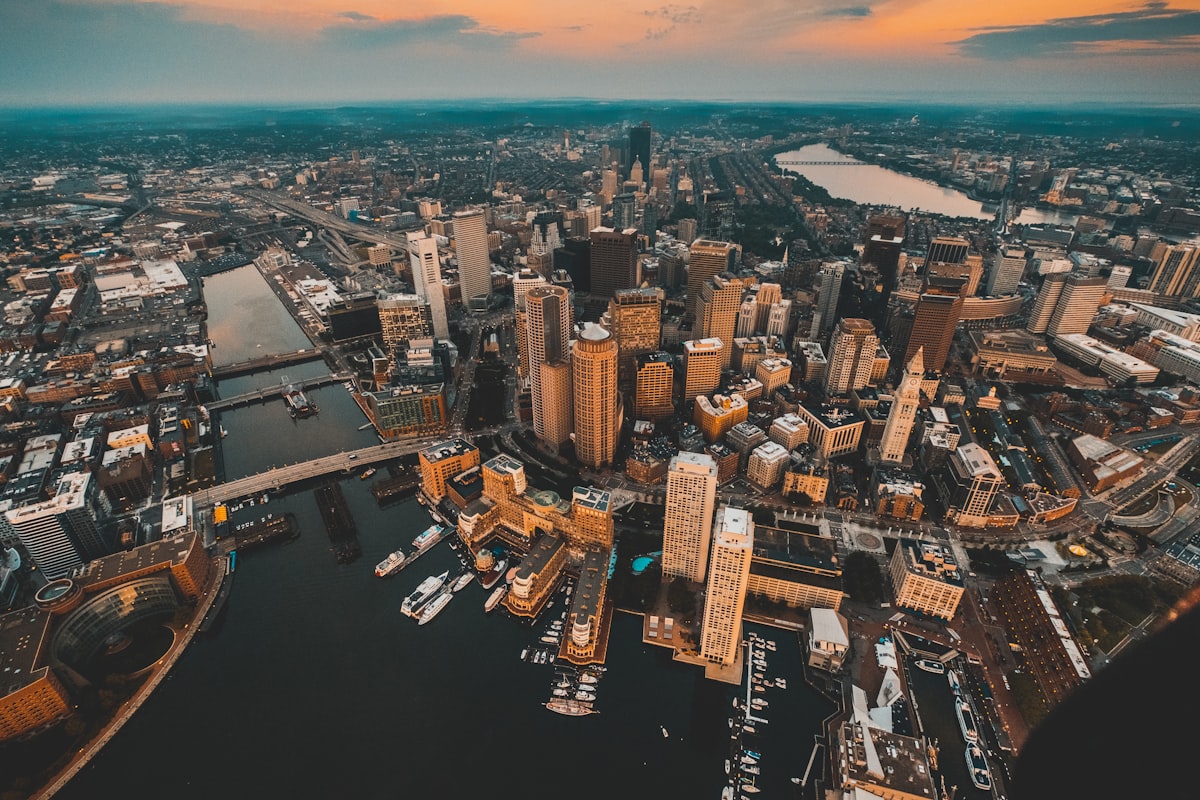
Boston sits at the epicenter of the global AI revolution. With MIT and Harvard anchoring the world's densest concentration of AI research, a biotech corridor that rivals any in the world, and a startup ecosystem that has produced hundreds of AI companies, greater Boston doesn't just consume AI. It creates it.
For Boston's 150,000+ small businesses, this proximity to the cutting edge creates a unique advantage: access to AI tools, talent, and expertise that businesses in other cities can only dream of. The question isn't whether AI is relevant to Boston's small businesses. It's how quickly they can leverage the ecosystem right in their backyard.
Boston's Innovation Economy
Greater Boston's economy exceeds $450 billion in GDP, powered by sectors that are inherently AI-intensive:
- - **Biotech and life sciences**
- The Kendall Square/Cambridge corridor is the world's #1 biotech hub, home to Moderna, Vertex, Sarepta, and 1,000+ life sciences companies.
- - **Higher education**
- Over 100 colleges and universities, including MIT, Harvard, Boston University, Northeastern, and Tufts.
- - **Healthcare**
- Mass General Brigham, Beth Israel Deaconess, and dozens of world-class medical institutions.
- - **Financial services**
- Fidelity, State Street, and hundreds of asset management firms along the Route 128 corridor.
- - **Technology**
- A deep startup ecosystem producing companies in AI, robotics, cybersecurity, and enterprise software.
Small businesses orbit each of these pillars — biotech suppliers, university service providers, healthcare practices, financial advisory firms, and tech-adjacent companies.
How Boston SMBs Are Leveraging AI
Biotech and Life Sciences Services
The biotech boom has created thousands of small businesses that support the industry — lab equipment suppliers, specialized recruiters, regulatory consultants, clinical trial logistics companies, and biotech-focused marketing firms.
AI helps these businesses operate at the speed and precision the biotech industry demands. A scientific recruiting firm in Cambridge uses AI for candidate matching, reducing time-to-fill for specialized biotech positions from 45 days to 18 days. In an industry where vacant positions cost companies $500-$1,000 per day in lost productivity, that acceleration makes the recruiter indispensable.
A regulatory consulting firm serving biotech startups implemented AI for FDA filing assistance and regulatory tracking. The system monitors regulatory changes across 50+ jurisdictions and alerts consultants to changes affecting their clients, a task that previously consumed 15+ hours per week of senior consultant time.
Healthcare Practices
Boston's healthcare ecosystem extends far beyond major hospitals. Thousands of private practices, dental offices, mental health providers, physical therapy clinics, and specialized medical businesses serve the metro area's 4.9 million residents.
AI applications in Boston healthcare practices include:
- - **Patient scheduling optimization**
- Maximizing provider utilization while minimizing patient wait times
- - **Clinical documentation**
- AI-assisted note-taking and coding that reduces documentation burden by 40-60%
- - **Insurance authorization**
- Automated prior authorization requests and follow-ups that reduce denial rates
- - **Patient engagement**
- Personalized health reminders, appointment management, and care plan adherence support
A dermatology practice in Back Bay implemented AI for scheduling, documentation, and patient communication. The practice saw a 30% increase in patient throughput (more patients per provider per day) without any decrease in care quality, generating an estimated $200,000 in additional annual revenue.
EdTech and Education Services
Boston's concentration of higher education institutions creates a massive market for education-related businesses — tutoring services, test prep companies, educational technology providers, continuing education programs, and training companies.
AI is transforming how these businesses deliver value. Tutoring companies use AI for adaptive learning platforms that personalize instruction to each student's level and learning style. Training companies use AI for course development, assessment creation, and learner engagement analysis. Test prep services use AI to identify each student's weakest areas and focus preparation accordingly.
A professional training company in the Seaport uses AI to develop customized corporate training programs. By analyzing pre-training assessments and individual learning patterns, they deliver training that's 40% more effective (measured by post-training competency assessments) than their previous one-size-fits-all approach.
Financial Services
Boston's financial services sector (from Fidelity-scale enterprises to solo financial advisors) is a natural fit for AI. Small wealth management firms, insurance agencies, and accounting practices use AI for client portfolio analysis, market research automation, compliance monitoring, and client communication personalization.
A boutique wealth management firm in the Financial District serving high-net-worth clients uses AI for portfolio rebalancing recommendations, tax-loss harvesting analysis, and personalized market commentary generation. The firm's managing director estimates the AI saves each advisor 10 hours per week, time redirected to client relationship building and new business development.
Food, Hospitality, and Tourism
Boston's tourism industry — driven by the Freedom Trail, Fenway Park, whale watching, and spectacular fall foliage, creates seasonal demand that challenges restaurants, hotels, and tour operators. AI helps manage the swing between summer/fall peak seasons and the quieter winter months.
A seafood restaurant in the North End uses AI-driven dynamic pricing for private dining and events, seasonal menu engineering, and targeted marketing campaigns timed to tourism cycles. Annual revenue increased 20% without any increase in seating capacity, entirely through better utilization and pricing.
The Boston AI Talent Advantage
Boston's greatest competitive advantage for small businesses is talent access. The metro area has the highest concentration of AI researchers and engineers per capita in the country (Brookings Institution, 2025). This means:
- AI implementation consultants are more available and competitive in pricing than in other markets
- Part-time and fractional AI talent can be sourced from university programs and the startup ecosystem
- Early access to new tools: Many AI startups offer Boston businesses early access or preferred pricing as they test products close to their home base
MIT's Industrial Liaison Program, Harvard Innovation Labs, and Northeastern's IDEA venture accelerator all connect small businesses with AI resources at below-market rates.
Getting Started for Boston Business Owners
Step 1: Tap into the ecosystem. No other city offers more AI resources for small businesses. MIT Enterprise Forum, MassChallenge, the Boston SCORE chapter, and the Massachusetts SBDC network are starting points.
Step 2: Identify your industry-specific opportunity. Biotech services? Healthcare? Financial advisory? EdTech? Each sector has well-established AI use cases with proven ROI.
Step 3: Start with what you have. Many Boston businesses already use software platforms (HubSpot — a Boston company — Salesforce, QuickBooks) that have added AI features. Enable them before buying new tools.
Step 4: Embrace the academic advantage. Graduate student projects, university consulting programs, and research partnerships can provide AI implementation support at a fraction of commercial consulting rates.
Boston's AI-Powered Future
Boston has been at the forefront of American innovation since before the nation existed. The city that brought the world the telephone, the computer, the internet's early infrastructure, and modern biotechnology is now shaping the AI revolution.
For Boston's small businesses, the opportunity is extraordinary: world-class AI tools, abundant talent, and an ecosystem designed to support innovation. The businesses that capitalize on this moment will define Boston's next chapter.
Frequently Asked Questions
How does proximity to MIT and Harvard benefit Boston small businesses adopting AI?
Boston's AI research ecosystem provides: early access to cutting-edge tools (AI startups often launch locally first), abundant implementation talent (graduate students, researchers, consultants), university programs that connect businesses with AI resources at below-market rates, and a culture of innovation that makes AI adoption feel natural.
What AI applications are most valuable for Boston's biotech ecosystem?
Small businesses serving biotech use AI for specialized recruiting (reducing time-to-fill from 45 to 18 days), regulatory compliance monitoring (tracking FDA changes across 50+ jurisdictions), clinical trial logistics optimization, and scientific documentation automation.
Is AI affordable for small businesses in a high-cost city like Boston?
Yes, and the ROI is actually stronger in high-cost markets. The same AI tools cost $200-$1,000/month everywhere, but labor savings are worth more in Boston. A dermatology practice achieved $200,000 in additional annual revenue through AI-driven efficiency gains. University programs and graduate student consultants also provide implementation support at below-market rates.